IN Brief:
- Vishay has introduced the VOLA617A automotive-grade phototransistor optocoupler.
- The device provides 5000VRMS isolation, 1414Vpeak VIORM, and 8000Vpeak VIOTM in a 4-pin LSOP package.
- High-voltage EV and industrial power systems are increasing demand for compact isolation components with stronger safety margins.
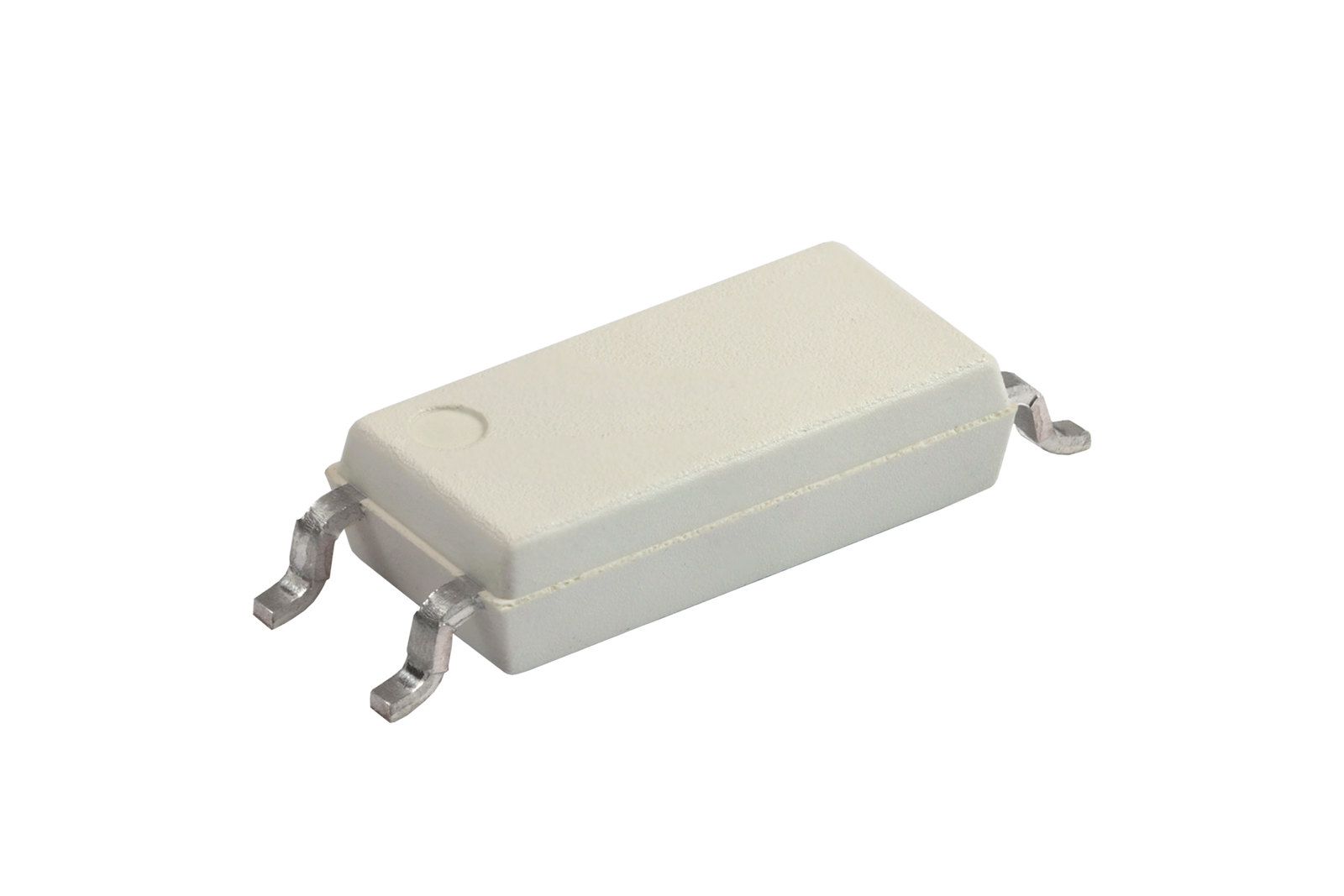
Vishay has introduced the VOLA617A automotive-grade phototransistor optocoupler for signal transmission with high galvanic isolation in electric vehicles and industrial automation systems.
The device combines 5000VRMS isolation voltage with a VIORM of 1414Vpeak and VIOTM of 8000Vpeak in a 4-pin LSOP low-profile package. It is designed for high-voltage EV systems, including 800V battery architectures, where galvanic isolation and noise isolation are central to dependable control.
Target applications include grid-connected on-board chargers, DC/DC converters, battery management systems, isolated wake-up signals, and system control interfaces exposed to high common-mode noise. The device can isolate DC voltages up to 1000V, extending its use beyond traditional 400V EV platforms.
VOLA617A consists of an infrared emitting diode optically coupled to a silicon planar phototransistor detector. The package provides creepage and clearance distances of at least 8mm, while the device is available in four current transfer ratio ranges and offers an 80V collector-emitter voltage rating.
The operating temperature range runs from -40°C to +125°C, with junction temperature capability up to +145°C. Vishay has also designed the optocoupler with low coupling capacitance of 0.5pF and high common-mode transient immunity, supporting use in electrically noisy power conversion environments.
Higher-voltage EV platforms place more stress on isolation components, insulation coordination, layout rules, protection design, and qualification evidence. Increasing the battery voltage can reduce current for a given power level, helping with cable sizing, charging speed, and system efficiency, but the surrounding control electronics must be protected from higher potentials and switching noise.
Isolation protects low-voltage control circuitry, microcontrollers, communication interfaces, and measurement circuits while preserving signal transfer across voltage domains. In EV systems, failures can affect safety, diagnostics, serviceability, and compliance. In industrial automation, the same problem appears across drives, grid-connected converters, robotics, battery systems, and distributed power equipment.
Wide-bandgap switching is also raising expectations for supporting components. GaN devices in BRC Solar power optimisers show how power conversion is being pushed towards higher efficiency and density, while ROHM and AIXTRON’s GaN production work points to the manufacturing scale forming behind that shift. Isolation, sensing, gate control, and protection devices must keep pace with the switching devices they support.
Component selection in high-voltage designs is shaped by more than isolation ratings alone. Package height, creepage, clearance, thermal conditions, EMC performance, ageing behaviour, and PCB contamination risk all affect how devices can be used in production hardware. A compact package only solves the board-area problem if it also preserves the margins required by safety and qualification regimes.
Samples and production quantities of VOLA617A are available, with stated lead times of eight weeks. The device gives power-electronics designs another isolation option for 800V EV systems and higher-density industrial conversion platforms, where control integrity and electrical separation increasingly define system reliability.