IN Brief:
- Kerlink has added LR-FHSS reception to its Wirnet iBTS, iBTS Compact, and iBTS 64 Highway gateways.
- The update allows compatible gateways to receive LR-FHSS and conventional LoRa uplinks simultaneously without replacing hardware or paying an additional feature licence.
- LR-FHSS remains uplink-only, with device joining and downlink messages continuing to use conventional LoRa.
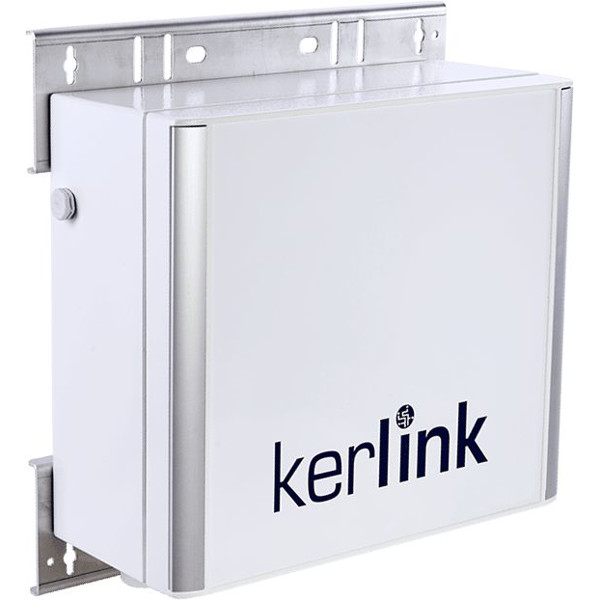
Kerlink has added Long Range–Frequency Hopping Spread Spectrum reception to its Wirnet iBTS industrial LoRaWAN gateways, allowing compatible equipment already in service to support additional uplink traffic through a software update. The capability operates alongside conventional LoRa reception, providing another modulation option for networks containing large numbers of sensors and remotely readable meters.
The upgrade covers the Wirnet iBTS, iBTS Compact, and iBTS 64 Highway platforms. Kerlink is making the functionality available without a hardware replacement or additional feature licence, with LR-FHSS transmissions processed by the gateway and forwarded to the LoRaWAN network server alongside existing traffic.
LR-FHSS is a frequency-hopping modulation standardised within the LoRaWAN regional parameters. It changes transmission frequency during a message, distributing its data across parts of the available radio spectrum rather than maintaining one fixed frequency for the entire transmission.
Conventional LoRa uses chirp spread-spectrum modulation to communicate over long distances at relatively low data rates. Its operating characteristics make it suitable for sensors that transmit small amounts of information intermittently, including temperature measurements, meter readings, and equipment status messages.
As more devices share the same radio channels, network capacity becomes constrained by the amount of time occupied by transmissions, the number of available channels, and interference from other devices operating in the band.
LR-FHSS changes the transmission arrangement by dividing data into coded fragments transmitted across different frequencies. A receiver designed for this modulation can reconstruct the message from the received fragments, providing additional resilience where interference affects particular parts of the spectrum.
Frequency hopping also permits a different balance between range, device density, and radio resource use. The actual capacity improvement depends on traffic patterns, signal conditions, gateway configuration, and the capabilities of the connected devices rather than a fixed multiplier applicable to every network.
Kerlink is initially targeting smart metering installations, where utilities are connecting more devices and may need to increase the frequency of readings. A larger number of readings generates additional uplink traffic while the available sub-GHz spectrum remains limited.
Adding gateway sites is one way to increase network capacity, but additional installations create costs associated with equipment, power, backhaul connectivity, site access, and maintenance. Kerlink’s upgrade provides an alternative for compatible existing installations by introducing another modulation within the current infrastructure.
The gateway can receive conventional LoRa messages and LR-FHSS uplinks simultaneously. Devices that continue using standard LoRa therefore do not need to migrate simply because other parts of the network begin transmitting with LR-FHSS.
Selection between the supported modulation modes is controlled through the network server and device configuration. Kerlink describes an arrangement in which operators can select the appropriate modulation on a device-by-device basis, allowing the network to accommodate different equipment capabilities.
The capability requires compatible transmitting devices. Semtech radios supporting LR-FHSS have been available since the SX126x family, but a gateway firmware update does not add the required radio functions to end devices whose hardware or firmware cannot transmit using the modulation.
There is also a directionality limitation. Kerlink’s implementation supports LR-FHSS for uplink messages only, while device joining and downlink communication continue to use conventional LoRa.
The new reception capability therefore does not provide an equivalent expansion of downlink capacity. Applications involving frequent commands or other substantial downlink traffic must continue to account for the timing and capacity constraints of the standard LoRa communication path.
Kerlink’s Wirnet iBTS products use Semtech’s V2 gateway architecture, which incorporates the signal-processing resources needed for LR-FHSS reception. This hardware foundation allows the additional demodulation capability to be enabled through software on supported gateways.
The same approach cannot automatically be applied to every LoRaWAN gateway. Other models may not contain the necessary receiver architecture or processing resources, meaning their suitability for LR-FHSS must be established separately.
Kerlink developed the implementation with Semtech and completed end-to-end validation with distributor Indesmatech. That work covered the reception and network integration of LR-FHSS messages before the feature was prepared for commercial deployment.
Regional radio regulations introduce further differences. Kerlink identifies benefits for United States networks affected by FCC dwell-time restrictions, where conventional LoRa operating modes may face constraints on spreading factor and payload size.
LR-FHSS provides another operating option under those conditions, although end devices must still comply with the applicable regional parameters and radio regulations. European deployments similarly require configuration consistent with their permitted frequency bands and transmission conditions.
Additional uplink capacity does not remove every constraint within a connected sensing network. Device battery consumption, message frequency, network-server processing, backhaul capacity, and the application software all remain relevant to overall system operation.
The software upgrade is available for supported new and existing Wirnet iBTS gateways. It allows operators to retain conventional LoRa devices while introducing LR-FHSS-capable equipment where the additional uplink modulation suits the network’s traffic and coverage requirements.