IN Brief:
- Würth Elektronik and STARTEAM GLOBAL are establishing a joint online PCB quotation and sourcing service.
- The partnership combines Würth's German manufacturing and qualified partners with STARTEAM production facilities in Italy, China, and Thailand.
- Customers will be able to assess PCB specifications, quotation requirements, and manufacturing options for prototypes and volume production.
Würth Elektronik and STARTEAM GLOBAL have formed a strategic partnership to expand printed circuit board sourcing across Europe and Asia. The arrangement begins with a joint online quotation service and brings together their manufacturing networks to offer customers additional options for prototype development, specialist boards, and volume production.
The partners are presenting the agreement at electronica 2026 in Munich, alongside plans for an online shop through which customers can define board requirements, calculate prices, and submit requests for quotation. The companies describe the digital platform as the first stage of a wider commercial relationship.
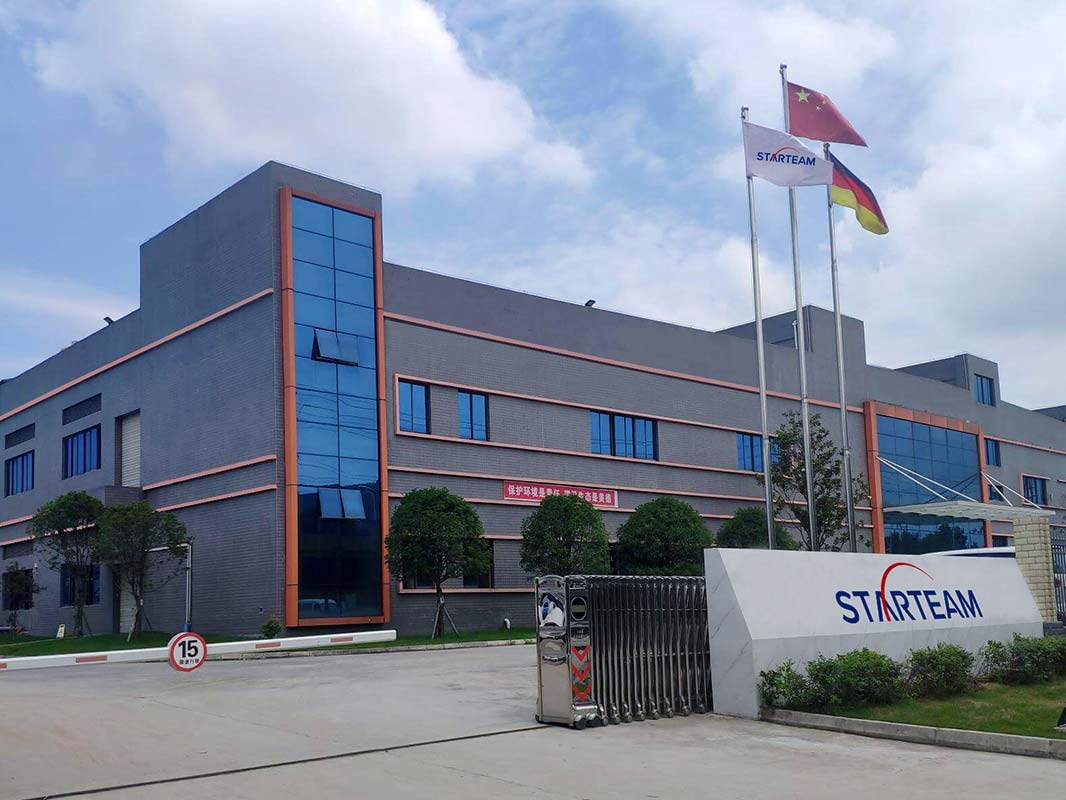
Würth Elektronik Circuit Board Technology operates manufacturing facilities in Germany and uses qualified production partners in Asia. STARTEAM’s manufacturing network includes Flero STARTEAM in Italy, Jiangyou STARTEAM in China, and Prachinburi STARTEAM in Thailand.
These locations provide different production capabilities and capacity options. STARTEAM’s Italian facility specialises in prototyping and high-mix, low-volume manufacturing, while the company’s Asian factories provide additional capacity for larger production programmes.
Printed circuit board sourcing begins with the electrical and mechanical characteristics of the finished assembly. Layer count, copper thickness, conductor geometry, dielectric materials, drilling requirements, and surface finishes all influence the processes and equipment needed to manufacture a design.
A board developed in small quantities may subsequently be transferred to a different manufacturing process or production location. That change introduces requirements for consistent materials, dimensions, electrical performance, and inspection results across the original and subsequent production runs.
Controlled-impedance circuits illustrate the difficulty of treating all PCB suppliers as interchangeable. The impedance of a transmission line depends on conductor geometry and the surrounding dielectric structure, so a change in laminate properties or layer stack-up can alter the electrical behaviour of a nominally identical design.
Manufacturing engineering must therefore establish suitable stack-up arrangements, material tolerances, and conductor dimensions before production. Where the original construction cannot be replicated exactly, a proposed alternative may need electrical review and qualification.
Similar considerations apply to high-density interconnect boards. Fine conductor structures, blind vias, and closely spaced components require manufacturing processes with appropriate registration accuracy, drilling capability, and inspection controls.
The complexity of a design affects both sourcing options and production yield. A factory capable of producing conventional multilayer boards may not offer every specialist process required for a densely interconnected high-speed assembly.
Würth Elektronik and STARTEAM intend to provide a wider selection of manufacturing routes through their combined capabilities. Individual designs will still need to be matched to the technology, materials, capacity, and quality requirements supported by the chosen production facility.
Prototype and production orders also involve different scheduling constraints. Development boards are frequently required in small quantities and may undergo repeated revisions, while sustained production depends on predictable process capability, component assembly preparation, and approved documentation.
Moving from prototype manufacture to volume production can require changes to panel layout, tooling, test arrangements, or process preparation. Those changes should preserve the validated characteristics of the finished PCB while accommodating the requirements of the larger production environment.
The joint online service is intended to simplify the initial commercial steps. Customers will be able to define specifications, calculate a price, and submit a quotation request using a three-step workflow.
The service does not replace engineering review. Manufacturing drawings, stack-up specifications, material choices, quality requirements, and production tolerances still determine whether a proposed board can be produced in accordance with its intended application.
Supplier qualification remains particularly important for automotive, medical, and industrial electronics. Product manufacturers may require documented process controls, material traceability, first-article inspection, or other application-specific approvals before a board can enter production.
Würth Elektronik and STARTEAM already have a technical relationship. STARTEAM participated in the 2025 s.mask roadshow with Würth Elektronik and Peters Group, examining additive solder mask technology and PCB manufacturing challenges.
The new partnership extends that technical cooperation into sourcing and commercial operations. Its stated scope includes manufacturing options across Europe and Asia, but the companies have not disclosed new joint investment, dedicated production targets, or a timetable for expanding individual factory capacity.
The online quotation arrangement will form the initial customer-facing element, supported by the two companies’ existing manufacturing infrastructure. Production selection will continue to depend on each PCB’s construction, quality requirements, order quantity, and delivery conditions.