IN Brief:
- Mouser Electronics is highlighting a LoRa resource centre for scalable low-power IoT design.
- The hub covers LoRaWAN architecture, design content, eBooks, and products for industrial and infrastructure applications.
- Long-range, low-power wireless design is becoming central to distributed sensing and industrial IoT deployment.
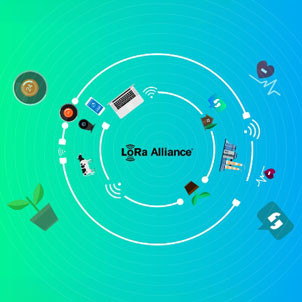
Mouser Electronics is highlighting a LoRa resource centre designed to support scalable, low-power wide-area IoT systems across industrial automation, infrastructure, agriculture, conservation, public safety, and smart sensing.
The resource hub brings together technical content, design material, eBooks, and wireless communication products for LoRa and LoRaWAN applications. It is aimed at designs where long range, low energy consumption, and relatively low network infrastructure cost are more valuable than high data throughput.
LoRaWAN has become a practical protocol for widely distributed, battery-powered endpoints that need to operate for long periods while sending modest volumes of data. Sensor networks in agriculture, utilities, environmental monitoring, buildings, cold-chain logistics, and industrial sites often fit that pattern. Cellular connectivity can be too costly or power-hungry, while Bluetooth and Wi-Fi may lack the required range or infrastructure model.
The hub includes an eBook produced with STMicroelectronics on Bluetooth and LoRaWAN connectivity, alongside articles, blogs, and product information. Featured products include Semtech’s LR2021 LoRa Plus RF transceiver, DFRobot’s DFR1093 LoRaWAN indoor gateway, Digi International’s XBee LR modules, and Ezurio’s Sentrius RS26x temperature sensors.
Semtech’s LR2021 is a fourth-generation LoRa IP device supporting terrestrial and satellite communication networks across Sub-GHz, 2.4GHz ISM, and licensed S-Band operation. It is designed to maintain LoRaWAN compatibility while adding expanded physical-layer modulation. DFRobot’s gateway combines a quad-core Cortex-A35 processor with a Semtech SX1302 transceiver, with versions available for 868MHz and 915MHz operation.
Digi’s XBee LR modules support LoRaWAN device-to-cloud connectivity for end-node sensor products, while Ezurio’s Sentrius RS26x sensors use LoRaWAN for long-range data transmission and Bluetooth LE for configuration and troubleshooting. Together, the product mix shows that LoRaWAN design spans gateways, modules, antennas, sensing hardware, provisioning, backend connectivity, and field-maintenance workflows.
Distributed sensing systems are rarely defined by the radio alone. A remote agricultural sensor, a cold-chain temperature monitor, a building occupancy node, and an industrial asset tracker all place different demands on enclosure design, firmware, sampling rate, certification, antenna performance, battery chemistry, and service access. LoRaWAN can provide the network layer, but the deployment succeeds only when the endpoint design matches the environment.
Power management remains central. Battery life can be lost through poor sleep-state design, unnecessary transmissions, inefficient sensing intervals, weak signal planning, or unsuitable gateway placement. Strong LoRaWAN deployments start with payload size, reporting frequency, gateway density, environmental conditions, duty-cycle limits, and acceptable latency already understood.
Wireless module selection is also increasingly tied to supply-chain, regulatory, and lifecycle considerations. European-made short-range wireless modules from u-blox show how connected-device design now has to account for certification, regional availability, software support, and long-lifecycle production. LoRaWAN products face the same issues once deployed across industrial estates, buildings, infrastructure, or remote assets.
Security has to be designed into the system from the start. Low-data-rate sensor networks may appear modest, but weak key management, poor provisioning, insecure gateways, compromised data, or unpatched firmware can expose operations. Device identity, authentication, update mechanisms, backend integration, and long-term maintenance all have to be handled before deployment scales.
The spread of distributed sensing is being driven by the need for better visibility across equipment, utilities, logistics, buildings, agriculture, and environmental assets. Many of these applications need dependable range, low maintenance, and predictable cost rather than bandwidth. Mouser’s LoRa resource hub gives development teams a structured path through the components, modules, gateways, and design content behind those networks, as industrial IoT moves from isolated pilots towards long-life field deployments.