IN Brief:
- Aaronia has shown magnetic high-frequency connectors and RF accessories at IMS 2026.
- The portfolio includes SPECTRAN real-time spectrum analysers, adapter sets, calibration sets, and magnetic connector technology.
- High-frequency test reliability increasingly depends on connection quality, setup repeatability, and rapid reconfiguration.
Aaronia has presented magnetic high-frequency connectors, adapter and calibration sets, and SPECTRAN real-time spectrum analysis equipment at the IEEE MTT-S International Microwave Symposium 2026.
The company used the Boston event to show equipment and accessories for microwave, millimetre-wave, radar, sensing, and high-frequency communications work. Its SPECTRAN series real-time spectrum analysers were presented alongside RF accessories intended to simplify laboratory and field measurements.
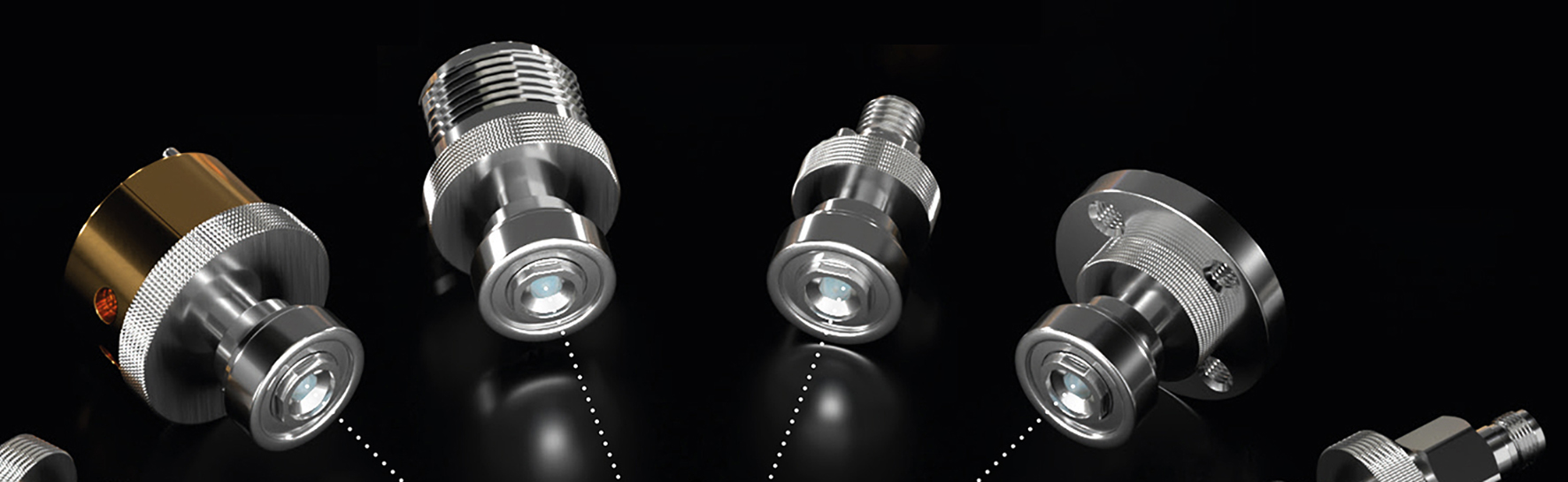
The most distinctive product focus is the magnetic RF connector technology. The connectors are designed to create reliable high-frequency connections without conventional tool-based tightening, reducing damage linked to incorrect torque, bent contacts, loose connections, damaged threads, or contamination. In measurement practice, connector wear can become a source of error as test setups are repeatedly reconfigured.
Aaronia is also promoting adapter and calibration sets that allow measurement setups to be changed more quickly when requirements shift. The sets include male-to-male, male-to-female, and female-to-female adapters, pairs of test leads, and dial gauge-based test fixtures. They are available for 3.5mm, 2.92mm, 2.4mm, 1.85mm, 1mm, and waveguide connector series, either individually or as a complete set.
At microwave and millimetre-wave frequencies, mechanical details become electrical problems. Alignment, connector condition, cable quality, calibration accuracy, and repeatability can all change the measured result. A worn or poorly tightened connection can introduce mismatch, loss, instability, or false readings that send debugging work in the wrong direction.
Higher-frequency design narrows tolerances further. A connection that behaves acceptably at lower frequencies may introduce meaningful error at tens of gigahertz. Torque control, connector inspection, calibration artefacts, cable handling, and repeatable fixturing remain central to RF laboratory practice. Magnetic connection approaches reduce one source of human variability by making engagement and alignment less dependent on manual tightening.
The IMS showcase also reflects heavier validation requirements across aerospace, defence, satellite, radar, 5G, 6G research, automotive sensing, and high-speed data systems. Wider bandwidths and higher carrier frequencies increase the importance of controlled measurement setups. Reconfiguration speed helps development throughput, but only if measurement traceability and repeatability are preserved.
System-level RF validation is already moving towards more software-driven and repeatable test environments, with platforms such as NI CHESS addressing aerospace RF link emulation. Aaronia’s work sits closer to the physical interface layer, where connectors, adapters, cables, and calibration tools determine whether the instrument chain can be trusted.
Measurement confidence depends on the entire setup, not only the analyser or generator. Spectrum analysers, vector network analysers, channel emulators, and signal generators provide useful data only when cables, adapters, connectors, fixtures, and calibration procedures behave predictably. Shared laboratories, field teams, and fast-moving development programmes place additional stress on that chain.
Magnetic connector technology may also help field use, where test engineers work under time pressure, limited access, vibration, and less controlled environmental conditions. Tool-free connection can reduce handling damage and shorten setup time, particularly where expensive RF cables and instruments are repeatedly connected and disconnected for commissioning, maintenance, spectrum monitoring, or defence support.
High-frequency engineering is increasingly constrained by test quality. Wider instantaneous bandwidths, dense modulation, phased arrays, beamforming, and millimetre-wave operation leave less margin for poor measurement practice. Aaronia’s IMS products place attention on a layer that is easy to overlook: connector integrity, adapter quality, and calibration discipline can decide whether high-frequency data is usable across the development cycle.