IN Brief:
- Quell’s EESeal inserts target EMI compliance issues at the connector interface.
- The technology is aimed at MIL-STD-461G failures where redesigning boards, shielding, or grounding would delay qualification.
- Connector-level filtering is becoming a practical tool for late-stage defence and aerospace electronics validation.
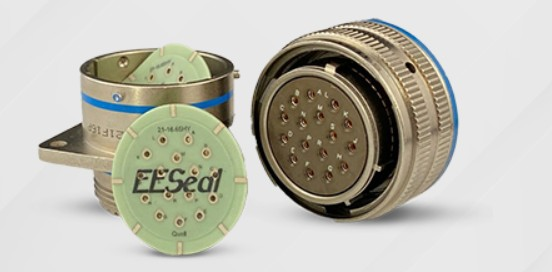
Quell is promoting EESeal EMI filter inserts as a connector-level route for addressing MIL-STD-461G electromagnetic interference failures in defence, aerospace, and other high-reliability electronics.
The inserts are designed to target emissions and susceptibility issues at the connector interface without requiring PCB redesign, connector replacement, soldering, or mechanical modification. Each device uses a silicone-based body containing miniaturised filtering electronics and is installed directly over connector pins.
MIL-STD-461G remains a key electromagnetic compatibility standard for defence and aerospace equipment. It is used to assess whether electronic systems can operate reliably in demanding electromagnetic environments, where conducted or radiated interference can affect performance, safety, and mission availability. Failure during qualification can force board respins, shielding changes, grounding revisions, or connector substitutions.
Those corrective paths carry programme risk because they can trigger new validation work and disrupt production schedules. Quell’s EESeal approach offers a narrower intervention, filtering at the connector rather than reopening the full design. Custom inserts can be built and supplied quickly, allowing teams to evaluate a corrective path during qualification activity.
The filtering can be tailored around frequencies identified during compliance testing, including conducted emissions, radiated emissions, and susceptibility to external interference. Connector-level treatment is especially relevant because cables often act as antennas, radiating unwanted energy from equipment or coupling external noise into sensitive circuits.
Modern defence and aerospace electronics create difficult EMC conditions. High-speed data links, RF systems, switched-mode power supplies, sensors, displays, processors, and communication equipment are packed into compact enclosures and platforms. Interfaces multiply, cable runs become complex, and the number of potential coupling paths increases. Even well-designed equipment can expose weaknesses once integrated into the full test environment.
Connector-level filtering does not replace good EMC design. Grounding, shielding, cable routing, return-path control, layout, bonding, filtering, and enclosure design remain the foundation. EESeal inserts are better understood as an additional tool for defined failure modes, particularly when the product is mechanically mature and wider redesign would restart too much of the approval process.
Defence electronics is also becoming more networked and timing-sensitive, as shown by rugged deterministic networking products such as Kontron’s CERES-TSN switch. As platforms carry more connected subsystems, EMC control becomes more difficult because high-speed interfaces, power electronics, RF links, and cable harnesses are all operating in the same physical space.
Qualification schedules add further pressure. Test-centre availability, customer milestones, export controls, documentation, and production commitments can turn an EMI problem into a programme problem. A remedy that can be installed and evaluated without changing the PCB or connector system can preserve options when conventional corrective measures would take too long.
Retrofit filtering is also part of a broader move towards modular corrective technologies. Engineers now have a wider toolkit that includes interposers, cable treatments, shielding materials, grounding products, filters, connector-level devices, and improved harness design. The appropriate choice depends on the failure frequency, current, voltage, environmental requirements, mechanical constraints, and long-term production plan.
Quell’s EESeal inserts highlight a practical reality in high-reliability electronics: compliance is designed across the whole system, but failures often emerge at interfaces. Connector-level filtering gives development teams another way to control emissions and susceptibility where cables, pins, and enclosures meet, reducing the chance that a late-stage EMC problem becomes a full redesign exercise.